Source Pourer Glass Olive Oil Bottle for Food, Beverage, and Vinegar
Find 30 Pourer Glass Olive Oil Bottle options with capacities from 100ml to 1000ml and shapes including round and square designs. Buyers can compare screw cap types, packing methods, and customization features from suppliers in Zhejiang, China.
Key considerations
Products List


250ml 16oz 500ml Square Vinegar Glass Cooking Olive Oil Bottle with Pourer
$0.19 - $0.24
MOQ: 10000 Pieces


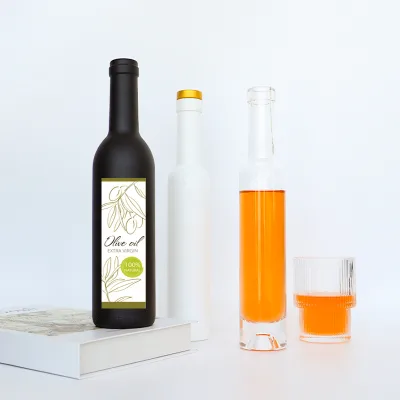
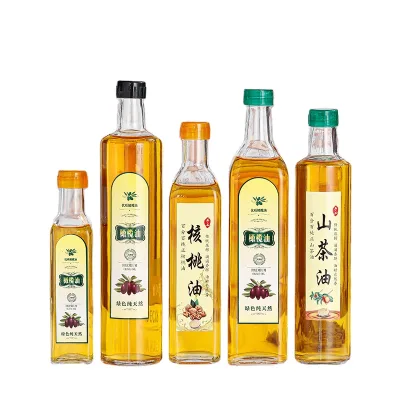
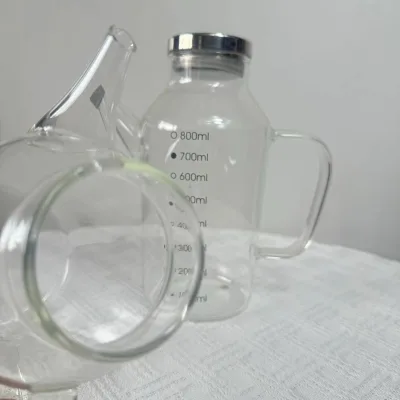


500ml Dark Green Oil Vinegar Cruet Olive Oil Glass Bottle with Pourers
$0.15 - $0.35
MOQ: 10000 Pieces

250ml 500ml 750ml Olive Oil Glass Bottles with Aluminum Cap and Pourer
$0.15 - $0.35
MOQ: 10000 Pieces
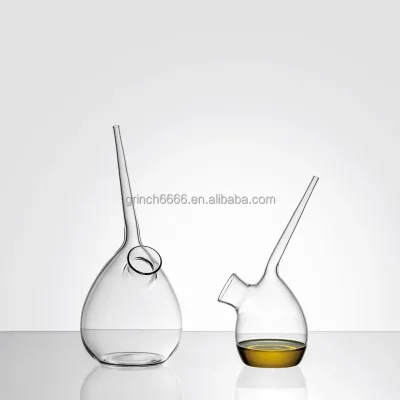
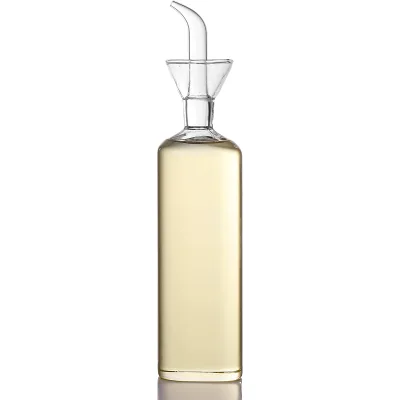


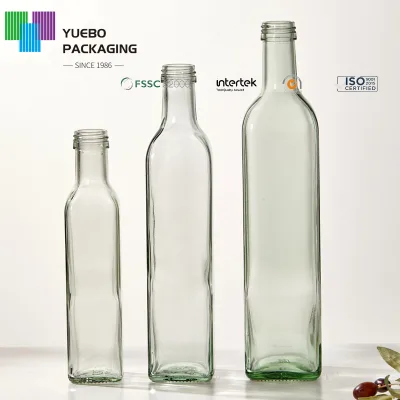
Comprehensive Sourcing Guide
Strategic Sourcing Guide for Pourer Glass Olive Oil Bottles
Understanding Technical Specifications and Design Variants
When sourcing pourer glass olive oil bottles, the primary objective is to identify vessels that combine structural integrity with functional dispensing capabilities. The market offers a diverse array of designs, ranging from traditional round profiles to modern square configurations. Based on available product data, the core material for these vessels is consistently glass, a choice driven by its non-reactive nature which preserves the delicate flavor profiles of olive oil and other culinary liquids. The physical dimensions and capacity are critical variables that dictate the suitability of a bottle for specific applications.
The supply chain presents several distinct model numbers that reflect different design philosophies and capacity standards. For instance, the model BX-0322D is associated with a 500ml capacity, while the BX-0285D and BX-0283D models correspond to 750ml and 250ml standards respectively. Other listings indicate a broader range of standard volumes, including 100ml, 250ml, 500ml, 750ml, and 1000ml, allowing buyers to select the exact volume required for their packaging line. Shape variations are equally significant; the market includes both round bottles, which are often preferred for their ergonomic handling and traditional aesthetic, and square bottles, which may offer superior shelf stability and space efficiency during storage and transport.
The sealing mechanism is a pivotal technical specification for olive oil applications. The majority of observed listings utilize a screw cap system, often paired with specific stopper materials to ensure an airtight seal. Common configurations include aluminum caps combined with plastic stoppers, or options featuring aluminum and plastic lids. The sealing type is frequently described as "screw" or "screw cap," ensuring a secure closure that prevents oxidation and leakage. For pourer-specific applications, the integration of a pourer spout is essential, though the exact internal geometry of the pourer must be verified against the specific model number to ensure it meets the desired flow rate and drip-free performance.
Compliance, Certification, and Regulatory Standards
Navigating the regulatory landscape is a fundamental aspect of sourcing glass packaging for food and beverage products. While specific certification statuses such as ISO 9001 or ISO 17025 are mentioned in background contexts, buyers must treat these as general industry references rather than guaranteed attributes of every listed product. The primary regulatory requirement for glass bottles intended for food contact is compliance with local and international food safety standards. Buyers should verify that the glass material is free from heavy metals and leachable substances that could contaminate the olive oil.
The Harmonized System (H.S.) Code for these products is a critical identifier for international trade. The provided data indicates that olive oil glass bottles typically fall under H.S. Code 7010902000. This classification is essential for calculating import duties, ensuring accurate customs documentation, and verifying that the product is correctly categorized for export from the origin country. The origin of these products is frequently listed as Zhejiang, China, a region known for its glass manufacturing capabilities. Understanding the origin is vital for assessing supply chain risks, including geopolitical factors and logistics costs.
Regarding certifications, buyers should not assume that a supplier possesses specific quality management certifications unless explicitly confirmed in the supplier's documentation. The presence of a "Professional Suggestions" service indicates that suppliers may offer guidance on compliance, but the buyer remains responsible for validating that the final product meets the specific regulatory requirements of their target market. This includes verifying that the glass is suitable for the intended storage duration and that the packaging materials, such as the aluminum caps and plastic stoppers, are food-grade compliant.
Cost Drivers and Pricing Dynamics
The pricing structure for pourer glass olive oil bottles is influenced by a complex interplay of factors, including material costs, customization requirements, and order volume. The observed price range in the market spans from $0.05 to $4.00 USD per unit. This wide variance suggests that the final cost is highly dependent on the specific model selected, the volume of the order, and the level of customization requested. Lower-priced items in this range likely correspond to standard, off-the-shelf models with minimal customization, while higher prices reflect specialized designs, custom branding, or smaller order quantities that do not benefit from economies of scale.
Minimum Order Quantity (MOQ) is a significant driver of unit cost. The data indicates an MOQ range of 50 to 30,000 pieces, with specific listings showing MOQs of 1,000 pieces or 10,000 pieces. Buyers with lower volume requirements may face higher per-unit costs or may need to negotiate with suppliers who can accommodate smaller batches. Conversely, larger orders can significantly reduce the unit price, making the investment in custom tooling or branding more viable. The payment terms also play a role in the financial dynamics of the transaction. Common payment methods observed include T/T (Telegraphic Transfer), PayPal, Western Union, and Credit Cards. Buyers should evaluate the security and flexibility of these payment options in relation to their cash flow management and risk tolerance.
Typical Applications and Usage Scenarios
The versatility of glass olive oil bottles makes them suitable for a wide range of applications beyond just olive oil. The primary usage identified is for olive oil, but the data also confirms suitability for beverages, vinegar, and general food packaging. This multi-purpose capability allows buyers to utilize a single supplier for various product lines, streamlining the procurement process. The "Type" attribute often lists "Olive Oil Glass Bottle" or "Round/Square," indicating that the design is optimized for viscous liquids like oil while remaining functional for thinner liquids like vinegar or water-based beverages.
The specific model numbers often correlate with their intended use cases. For example, the D3053 model is associated with dimensions of 6626.5cm, suggesting a compact design suitable for smaller servings or premium packaging. The BX260114Z1 model is linked to a range of capacities from 100ml to 1000ml, making it ideal for bulk distribution or multi-pack configurations. The "Uasage" (Usage) attribute explicitly mentions "Packing Olive Oil," reinforcing the primary function of these vessels. However, the inclusion of "Beverage" and "Food" in the usage list highlights the adaptability of the glass material, which is inert and does not impart flavors to the contents.
Buyers should consider the end-user experience when selecting a bottle. The shape and size must align with the brand's image and the consumer's handling preferences. Round bottles are often perceived as more traditional and elegant, while square bottles may convey a modern, space-efficient aesthetic. The inclusion of a pourer is a key feature for commercial and home use, facilitating easy dispensing without the need for a separate funnel. The sealing type, typically a screw cap, ensures that the bottle can be resealed, which is crucial for maintaining the quality of the oil over time.
Supplier Evaluation and Service Capabilities
Evaluating potential suppliers requires a focus on their service offerings, customization capabilities, and logistical reliability. The data indicates that "Flexible Customization" is a key advantage offered by many suppliers. This includes the ability to customize the logo, color, and potentially the shape or size of the bottle. The "OEM" (Original Equipment Manufacturer) status is confirmed as "Yes," meaning suppliers are equipped to produce bottles under the buyer's brand name. This is a critical factor for brands looking to establish a unique market presence.
The service level provided by suppliers is another important consideration. Listings mention "Provided Professional Suggestions," indicating that suppliers may offer technical advice on bottle selection, sealing, and packaging. This advisory role can be invaluable for buyers who are new to the glass packaging industry or are launching a new product line. The availability of free samples is also a significant benefit, allowing buyers to physically inspect the quality, weight, and functionality of the bottle before committing to a large order.
Logistical capabilities are assessed through the delivery time and packing methods. The observed delivery time is typically 7-10 working days, which suggests a relatively efficient production and shipping process. However, buyers should verify this timeline against their specific production schedules and the current status of raw materials. The packing methods vary, with options including "Carton," "Pallet," or a combination of "Carton + Pallet." The choice of packing affects the safety of the goods during transit and the efficiency of storage at the destination. For large orders, palletized shipping is often preferred to minimize handling and reduce the risk of breakage.
Quality Control and Long-Term Procurement Considerations
Maintaining consistent quality is paramount when sourcing glass packaging. Buyers should implement a rigorous quality control (QC) process that includes visual inspections for defects such as bubbles, cracks, or uneven sealing. The "prod_packing" attribute lists options like "Carton or Pallet," which implies that the packaging method itself is a variable that can impact quality. Ensuring that the bottles are properly cushioned and secured during transit is essential to prevent breakage.
Long-term procurement considerations involve building a sustainable relationship with suppliers. The "Custom Order" attribute is marked as "Accept," suggesting that suppliers are open to ongoing collaborations and repeat orders. This flexibility is beneficial for buyers who plan to scale their production or introduce new product variants. The ability to customize the logo and design allows for brand evolution over time without the need to switch suppliers.
Buyers should also consider the environmental impact of their packaging choices. Glass is a recyclable material, and sourcing from suppliers who prioritize sustainable practices can enhance the brand's reputation. The "Advantage" of "Flexible Customization" can also be leveraged to create eco-friendly packaging solutions, such as using recycled glass or reducing the weight of the bottle to lower transportation emissions.
Comparative Analysis of Product Models
To assist in decision-making, the following table summarizes the key attributes of the observed product models. This comparison highlights the diversity in capacity, shape, and specifications available in the market.
| Product Model | Standard Capacity | Shape | Sealing Type | Origin | Packing Method |
|---|---|---|---|---|---|
| BX-0322D | 500ml | Round Bottle | Screw Cap | Zhejiang | Carton or Pallet |
| BX-0285D | 750ml | Round Bottle | Screw Cap | Zhejiang | Carton + Pallet |
| BX-0283D | 250ml | Round Bottle | Screw Cap | Zhejiang | Carton + Pallet |
| BX260114Z1 | 100-1000ml | Square Bottle | Screw Cap | Zhejiang | Carton + Pallet |
| D3-67 | 5656130mm | Square Bottle | Screw Cap | Zhejiang | Carton |
| D3053 | 6626.5cm | Round/Square | Screw Cap | Zhejiang | Pallet or Carton |
| IDKYM215 | 100-1000ml | Round/Square | Screw Cap | China | Pallet or Carton |
This table illustrates that while the core material and sealing type remain consistent, the capacity and shape vary significantly. Buyers should select the model that best aligns with their specific product requirements and branding strategy. The origin is consistently listed as Zhejiang or China, indicating a concentrated manufacturing hub for these products. The packing methods are flexible, allowing buyers to choose the option that best suits their logistics needs.
Final Procurement Recommendations
In conclusion, sourcing pourer glass olive oil bottles requires a careful balance of technical specifications, cost considerations, and supplier reliability. The market offers a wide range of options, from standard 250ml bottles to large 1000ml containers, with varying shapes and sealing mechanisms. Buyers should prioritize suppliers who offer flexible customization, professional support, and reliable delivery times. By leveraging the available data and conducting thorough due diligence, buyers can secure high-quality packaging that meets their operational and branding needs. The key to successful procurement lies in understanding the nuances of each product model and aligning them with the specific requirements of the olive oil or beverage product being packaged.
FAQs
What customization options are available for these bottles?
Flexible customization is available for logo, color, and design. Suppliers accept custom orders and can provide professional suggestions to tailor the bottle to your specific branding needs.
Which shapes are offered for pourer glass olive oil bottles?
Both round and square bottle shapes are available in the market. Round bottles offer a traditional aesthetic, while square bottles provide superior shelf stability and space efficiency for storage.
Can I order small quantities of olive oil glass bottles?
Minimum order quantities vary significantly, ranging from 50 to 30,000 pieces depending on the supplier. Some listings specify an MOQ of 1,000 or 10,000 pieces for standard models.
How long does delivery take for these glass bottles?
The typical delivery time is 7 to 10 working days after order confirmation. This lead time applies to standard production runs and may vary based on customization requirements.
What payment methods are accepted for purchasing these bottles?
Common payment methods include T/T, PayPal, Western Union, and Credit Cards. Buyers should verify specific terms with the supplier before finalizing the transaction to ensure secure payment.
Which capacities are standard for these glass olive oil bottles?
Standard capacities include 100ml, 250ml, 500ml, 750ml, and 1000ml. Specific models like BX-0322D correspond to 500ml, while others support a broader range of volumes.
What sealing types are used for these olive oil bottles?
The majority of bottles use a screw cap sealing type. Common configurations include aluminum caps with plastic stoppers or options featuring aluminum and plastic lids for an airtight seal.